Virtual care expands reach, but effective medicine still depends on context, examination, and human connection. A video visit can save hours of travel, connect a rural clinic with a specialist, and make routine follow-up easier. It can also conceal a deteriorating patient behind a poor connection, exclude someone without a private room, or delay an examination that cannot be performed through a screen.
The useful question is not whether remote care is good or bad. It is which clinical tasks it can perform safely, for whom, under what conditions, and with what route to in-person care when uncertainty exceeds the limits of the medium.
Remote Care Is A Set Of Tools
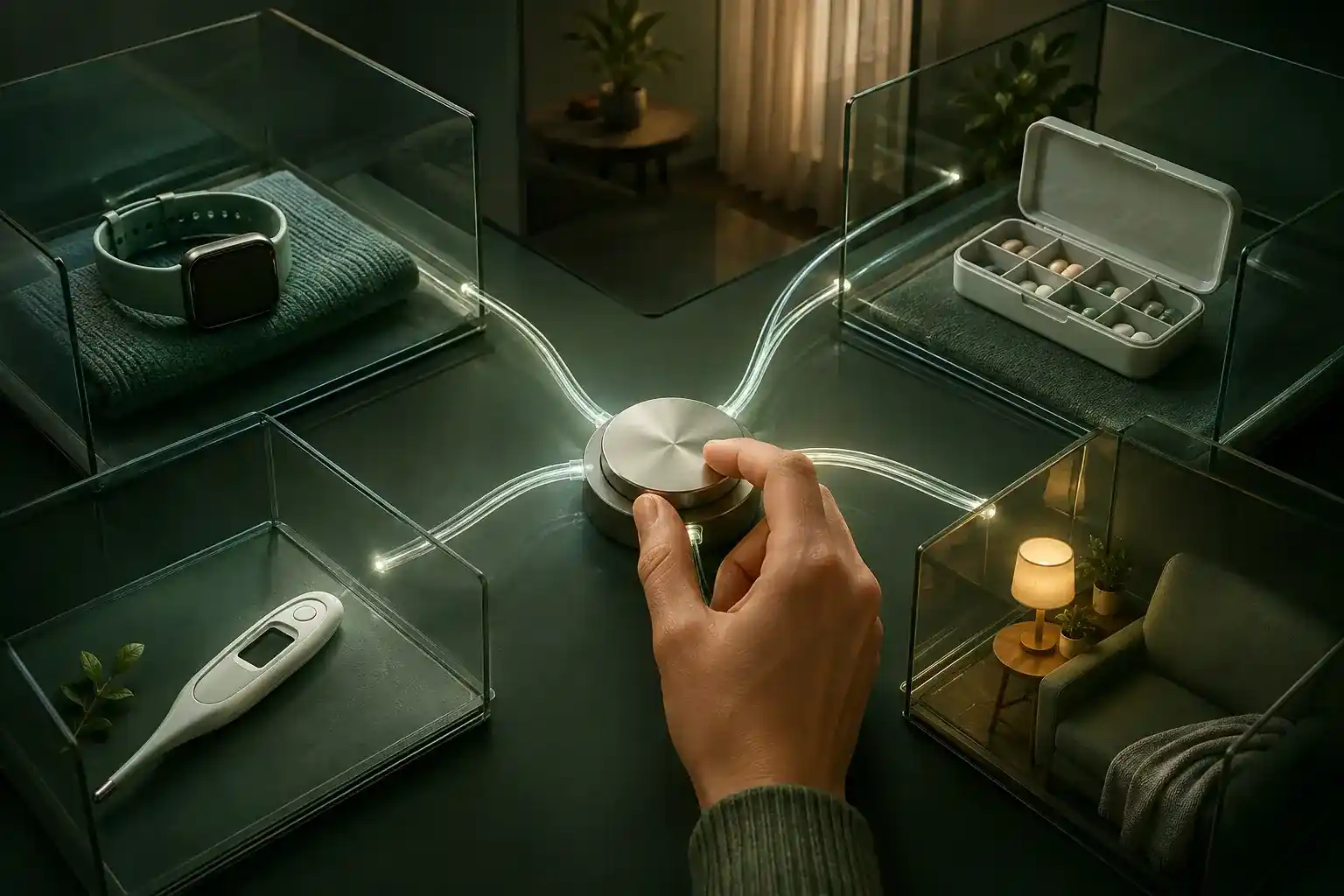
Telehealth includes live consultations, asynchronous messages, exchange of images, remote monitoring, specialist advice, and patient education. These modes solve different problems. A secure photograph may help a clinician assess a healing wound, while continuous monitoring may reveal a trend that a brief office visit misses. A phone call may be more accessible than video for one patient and less informative for another.
Programs should select a mode based on the clinical purpose rather than treating video as a substitute for every encounter. WHO guidance cautions that digital interventions are not a replacement for functioning health systems and cannot address every underlying constraint in care delivery.[1]
Convenience Can Improve Continuity
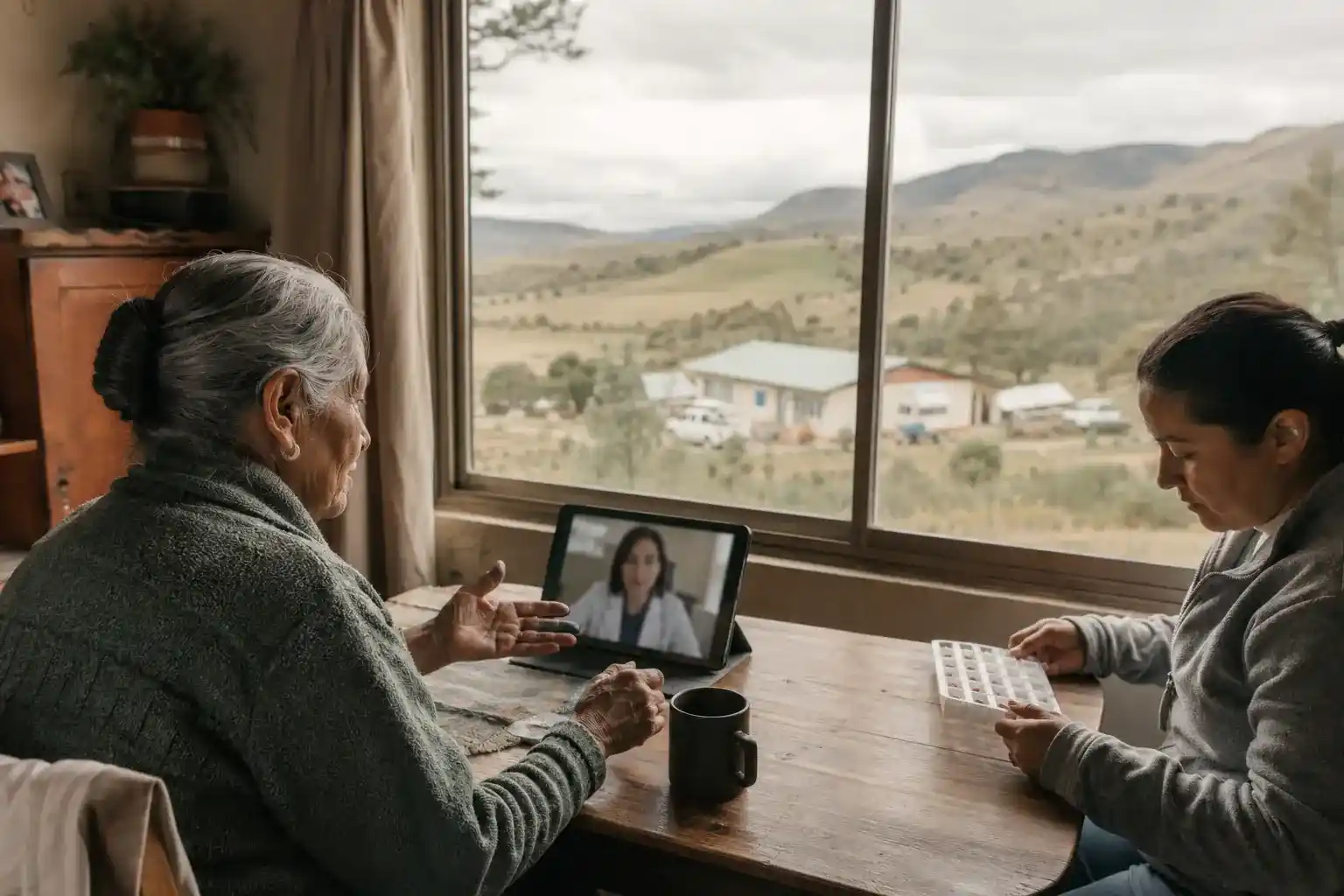
Remote visits are especially useful when the main task is discussion, education, medication review, or follow-up based on information that can be gathered reliably at home. They can reduce missed appointments, allow caregivers to join from another location, and connect local clinicians with scarce expertise.
Convenience has clinical value when it helps patients maintain contact instead of postponing care. It can also reduce exposure to infection and preserve in-person capacity for people who need physical procedures or close observation. The benefit, however, depends on integration with records, prescribing, laboratory services, referrals, and emergency pathways.
The Physical Examination Still Matters
Cameras and home devices cannot reproduce every part of an examination. Image quality, lighting, device accuracy, patient technique, and the inability to palpate, auscultate, or inspect a private area can narrow the evidence available to a clinician. Some patients may also describe symptoms incompletely because they do not know which details matter.
The Agency for Healthcare Research and Quality identifies limited physical examination, communication problems, and reliance on patient-measured findings as potential contributors to diagnostic error in telehealth.[2] Safe practice requires explicit thresholds for converting a remote encounter into an in-person assessment.
Clinical Risk Changes During The Visit
A visit that appears suitable for remote care at scheduling may reveal chest pain, neurological symptoms, breathing difficulty, severe dehydration, safeguarding concerns, or rapidly worsening illness. Clinicians need the patient’s physical location, an emergency contact process, and a clear escalation plan before an urgent situation occurs.
Triage should consider age, communication ability, cognitive status, pregnancy, comorbidities, symptom severity, available equipment, and the reliability of follow-up. A patient should never carry the burden of deciding alone whether the technology is sufficient for a problem they cannot clinically assess.
Digital Access Is Uneven
Broadband, data plans, current devices, technical confidence, language support, accessible design, and a quiet private space are health-care resources in a remote model. Requiring video can exclude patients who could participate by phone. Requiring a portal can create a barrier for people with limited literacy, vision, dexterity, or digital experience.
WHO describes digital health as a means of supporting equitable access to quality services while recognizing the challenge of achieving that goal in settings with limited digital capacity.[3] Programs should offer multiple channels, assistance, interpretation, disability accommodations, and an in-person alternative without penalty.
Privacy Depends On Both Ends
A secure clinical platform does not guarantee a private consultation. Patients may join from work, a shared home, a car, or a public place. Sensitive questions about mental health, sexual health, violence, substance use, or family relationships require attention to who can hear or enter the room.
Clinicians should confirm identity, location, privacy, and consent at the start. Systems should minimize unnecessary recording, restrict access, protect messages and device data, and explain what becomes part of the health record. Staff also need private workspaces and procedures that prevent information from appearing on shared screens or devices.
Remote Monitoring Creates New Work
Home blood pressure cuffs, pulse oximeters, scales, glucose monitors, and wearables can generate useful trends. They can also produce false alarms, missing data, and volumes of information that no one is assigned to review. A monitoring program is unsafe if patients believe someone is watching continuously when alerts are checked only during office hours.
Responsibilities should be explicit: which device is supported, how it is validated, how often data are reviewed, what thresholds trigger action, who responds, and what the patient should do during an emergency. The technology must fit a staffed clinical service rather than create an unattended stream of risk.
Quality Requires System-Level Design
WHO’s guidance on scaling telemedicine emphasizes strategy, clinical governance, infrastructure, legislation, workforce, finance, and monitoring rather than technology alone.[4] Those elements determine whether a program remains safe after the urgency and attention of a pilot have passed.
Quality measures should include diagnostic follow-up, unplanned emergency care, technical failure, equity of use, patient understanding, clinician workload, privacy incidents, and outcomes. High visit volume is not proof that the right patients received the right form of care.
A Practical Suitability Check
- Purpose: Define what the encounter must accomplish and what evidence is needed.
- Patient: Consider symptoms, risk, communication, accessibility, privacy, and preferences.
- Modality: Choose video, phone, messaging, monitoring, or in-person care for the task.
- Limits: Identify examinations, tests, or observations that cannot be obtained remotely.
- Escalation: Establish when and how the patient moves to urgent or in-person assessment.
- Continuity: Connect the encounter to records, prescriptions, tests, referrals, and follow-up.
- Review: Monitor safety, access, workload, and outcomes, then revise the service.
A Doorway, Not A Destination
Remote care works best as one doorway into an integrated system. It can bring expertise closer, make routine contact easier, and reveal information from daily life that a clinic visit misses. Its limitations become dangerous when convenience is mistaken for clinical completeness.
A responsible service tells patients what the technology can do, notices when it is no longer enough, and makes the transition to hands-on care simple. The measure of success is not how many visits remain virtual. It is whether every patient reaches the form of care their condition requires.
A durable remote-care model must protect information and prevent innovation from serving only the easiest users. See our analyses of patient privacy in connected care and medical innovation beyond early adopters.