
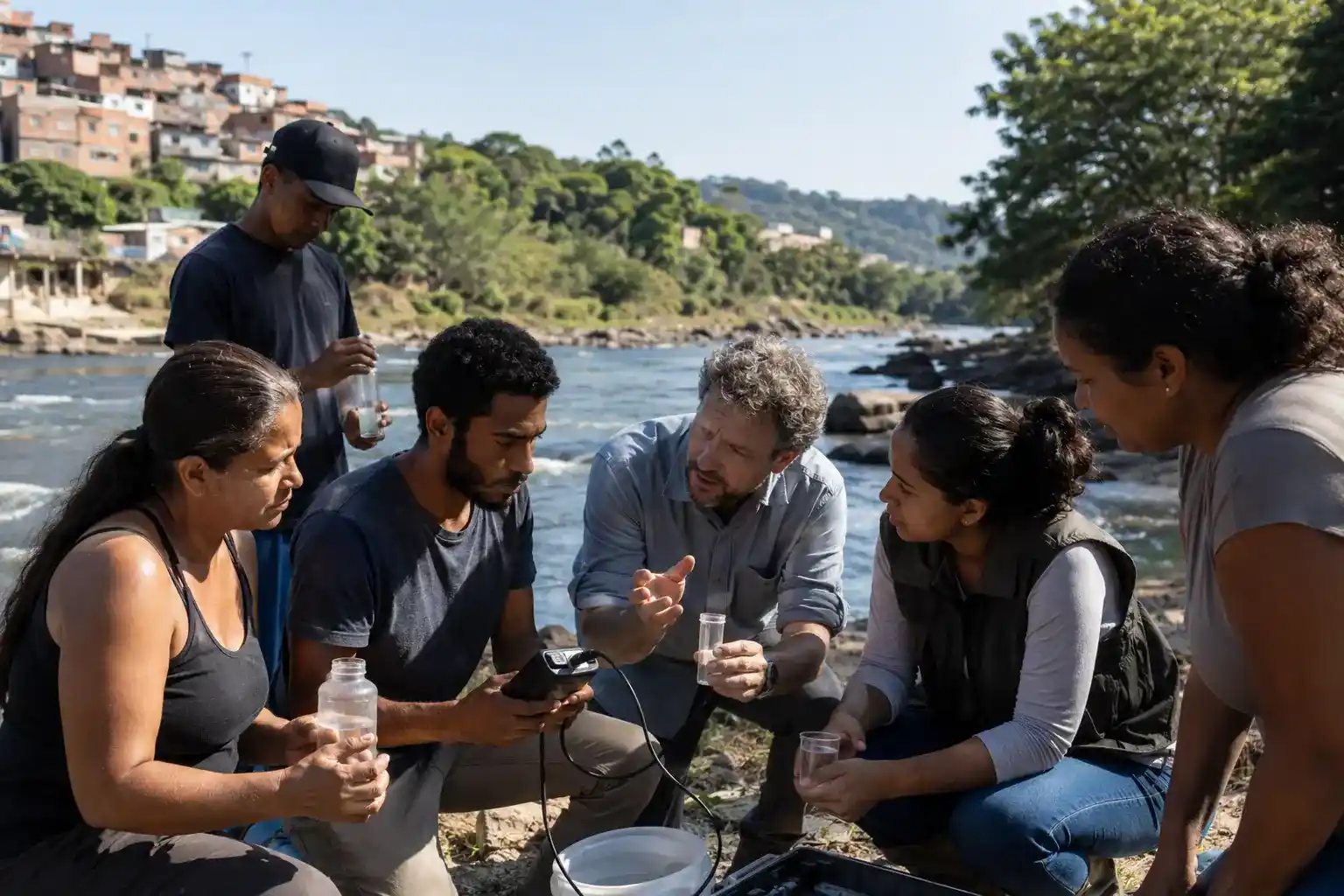
Trust grows when scientific institutions listen carefully, explain uncertainty, and make accountability visible. Researchers cannot demand confidence simply by pointing to expertise. People judge science through lived experience: whether questions are heard, benefits are shared, conflicts are disclosed, mistakes are corrected, and institutions keep their promises after a study or crisis leaves public attention.
The durable objective is not to make every audience agree with every conclusion. It is to become demonstrably trustworthy while helping people evaluate evidence, uncertainty, and competing claims for themselves.
Trust Is Relational
A person may accept the competence of researchers while doubting an institution’s motives, fairness, or willingness to admit harm. Communities may remember studies conducted without meaningful consent, environmental concerns dismissed for years, or findings announced without practical support. More information alone cannot repair a relationship shaped by those experiences.
Researchers should ask what trust means in the specific setting. Is the concern about data use, commercial influence, unequal risk, previous neglect, changing advice, or lack of local control? A precise diagnosis allows an institution to change practice rather than treating skepticism as a deficit in the audience.
Begin With Listening
Engagement should start before the research question, methods, and communication plan are fixed. Community members can identify relevant outcomes, language that misrepresents experience, practical barriers to participation, and harms invisible to a distant research team. Listening sessions are useful only when participants can see how their input affected a decision.
WHO defines risk communication as an exchange of information, advice, and opinions between experts and people facing a threat so they can make informed decisions.[1] The word exchange matters: communication that travels only outward may distribute facts without building understanding.
Make The Research Process Visible
Public summaries often present a finding without showing how participants were selected, what comparison was made, which outcome was primary, or how uncertainty was estimated. Plain-language explanations of these choices help readers understand why one study deserves more weight than another.
The National Academies’ work on science communication emphasizes that effectiveness depends on goals, audiences, context, and an evidence-based understanding of how people interpret information.[2] Researchers should test communication with intended audiences rather than assuming that simplifying technical vocabulary is sufficient.
Explain Uncertainty Without Evasion
Uncertainty is often communicated badly in two directions. Institutions may hide it to sound decisive, then appear unreliable when guidance changes. Or they may list every caveat without identifying what remains well supported. A useful explanation states the main conclusion, degree and sources of uncertainty, practical implications, and evidence that could change the assessment.
Changing a recommendation can be evidence that monitoring and correction are working. Trust is better served when institutions explain what changed in the data, why that affected the judgment, and what remains unchanged, rather than pretending the earlier conclusion never existed.
Disclose Interests And Constraints
Funding, commercial partnerships, advocacy commitments, institutional priorities, and career incentives do not automatically invalidate research. Concealing them prevents audiences from evaluating possible influence. Disclosure should be specific enough to be useful and paired with safeguards such as independent analysis, preregistration, data access, or conflict-based recusal.
Institutions should also explain constraints on data sharing, deadlines, sample access, and decision authority. Transparency is credible when it includes inconvenient limitations, not only information that supports a preferred message.
Share Knowledge As A Public Good
Paywalls, inaccessible formats, missing data, and technical language can leave the people who contributed to research unable to learn from it. Results should return to participants and communities in timely, understandable, and accessible forms, including negative or inconclusive outcomes.
UNESCO’s Recommendation on Open Science connects quality and integrity with open methods and outputs, rigorous scrutiny, collective benefit, equity, and engagement beyond the scientific community.[3] Openness must still protect privacy, cultural rights, security, and legitimate restrictions, but those limits should be explained.
Use Trusted Messengers Without Outsourcing Trust
Local clinicians, teachers, community organizations, faith leaders, and patient advocates may understand how information fits daily experience. Partnership with them can improve relevance and reach. It should not be used to borrow credibility while excluding them from decisions or leaving them to defend choices they did not shape.
Researchers should equip partners with evidence, uncertainty, and channels for questions, while respecting their independence. Different communities may need different messengers and formats. Consistency should mean fidelity to the evidence, not identical wording everywhere.
Make Correction And Remedy Visible
Retractions, corrections, adverse events, privacy breaches, and participant complaints test institutional trustworthiness. Slow or defensive responses suggest that reputation matters more than truth or people. Clear procedures should identify who investigates, how affected people are informed, what records are corrected, and how recurrence will be prevented.
Accountability also includes remedy. An apology without changed practice, support, or compensation may acknowledge harm while leaving its consequences with the community. Public reporting should track promised actions through completion.
Measure The Relationship, Not The Campaign
Page views and message recall reveal little about whether people feel heard or can use the information. Better measures include understanding, ability to identify uncertainty, participation in decisions, response to questions, representation, complaint resolution, and whether partnerships survive beyond a single project.
CDC community-engagement guidance recommends information that is accurate, clear, understandable, honest, and prepared for challenging questions, with explicit attention to scientific uncertainty.[4] Feedback should be continuous so institutions can change communication and conduct as conditions evolve.
A Trustworthiness Checklist
- Listen: Identify concerns, history, priorities, and preferred channels before deciding the message.
- Include: Give affected people influence over questions, methods, interpretation, and communication.
- Explain: Show how evidence was produced, what it supports, and where uncertainty remains.
- Disclose: Make funding, interests, constraints, and decision authority visible.
- Return: Share findings in timely, accessible forms with participants and communities.
- Correct: Acknowledge error quickly, repair the record, and address resulting harm.
- Stay: Maintain relationships and report on commitments after the immediate project ends.
Earn Confidence Through Conduct
Public trust cannot be restored by a single campaign because it was not created by a single message. It grows from repeated encounters in which institutions are competent, honest, fair, responsive, and willing to change.
Researchers contribute by opening the process, respecting community knowledge, communicating proportionately, and treating correction as an obligation rather than a threat. People may still disagree about values or action. Trustworthiness ensures that disagreement occurs in a relationship where evidence and accountability remain visible.
Trust improves when institutions explain both agreement and disagreement honestly. Our guide to what scientific consensus means clarifies how evidence converges, while healthier scientific debate considers how uncertainty should remain open to scrutiny.
Sources
- World Health Organization, Risk Communication And Community Engagement.
- National Academies Of Sciences, Engineering, And Medicine, Communicating Science Effectively.
- UNESCO, Recommendation On Open Science.
- Centers For Disease Control And Prevention, Community Engagement Playbook: Sharing Information.