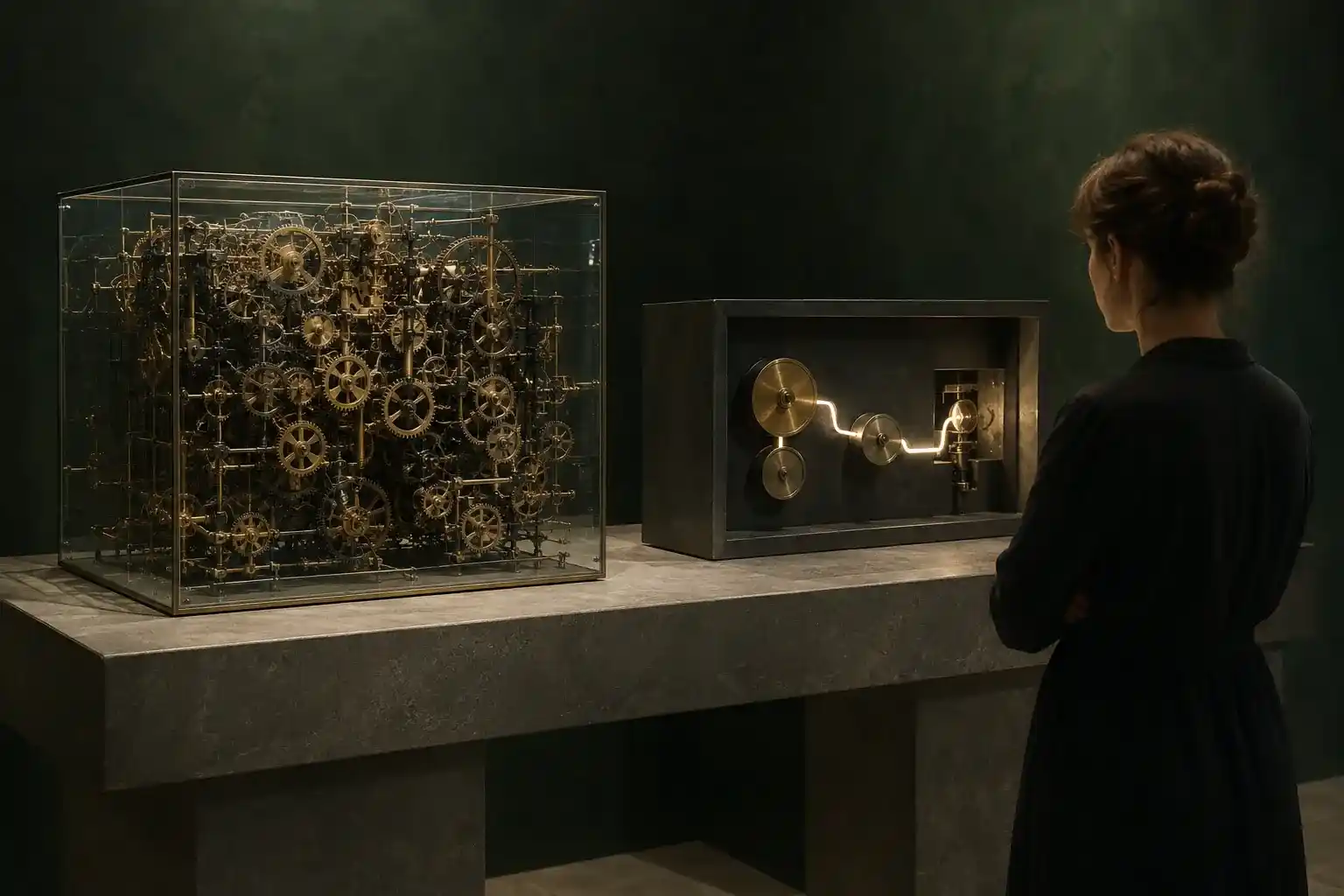

New creative tools are expanding possibility while raising practical questions about authorship and value. Writers can generate alternatives, designers can explore visual directions, musicians can test arrangements, and filmmakers can prototype scenes at extraordinary speed. Yet abundant output does not remove the work of choosing, shaping, verifying, and taking responsibility.
Generative AI changes creative production by lowering the cost of variation. Its lasting value depends on how people integrate it into a process, what data and permissions support the tool, how contributions are credited, and whether audiences can trust what they encounter.
Generation Is Only One Part Of Creation
Creative work includes forming an intention, researching, selecting constraints, developing a voice, revising, coordinating collaborators, and judging whether the result communicates. A model can supply options within this process, but it does not automatically supply the human purpose or accountability that makes an artifact meaningful.
Different workflows involve different degrees of human control. Using AI to transcribe an interview, suggest titles, or remove noise differs from asking for a finished image and publishing the first output. Teams should document where human decisions materially determine expression and where generated material remains largely unchanged.
Authorship Depends On Human Contribution
Copyright rules vary by jurisdiction, but human authorship remains central in the United States. The U.S. Copyright Office’s 2025 report concludes that existing law can protect human-authored expression in works involving AI, while purely AI-generated material is not protected simply because a person supplied prompts.[1]
A human may contribute protectable selection, coordination, arrangement, modification, or other original expression. The question is not whether AI appeared somewhere in the workflow but what the person actually authored. Keeping drafts, prompts, source material, edits, and decision notes can help explain that contribution.
Registration Requires Honest Disclosure
The U.S. Copyright Office’s registration guidance directs applicants to disclose more than a minimal amount of AI-generated material and describe the human-authored contribution, while excluding nonhuman material from the claim.[2] This distinction protects the integrity of the record and avoids claiming rights that do not exist.
Creative teams need provenance practices before a dispute. Files should identify which model and version were used, when generation occurred, what references or inputs were supplied, and what humans changed. Provenance also supports internal review, client assurances, later editing, and correction when an output contains a problem.
Training Data Raises Separate Questions
Whether an output is copyrightable is different from whether training or input use is lawful. Models may be trained on large collections containing protected work, licensed material, public-domain works, and other data. Legal questions about training remain contested and jurisdiction-specific.
Organizations should evaluate provider terms, data sources disclosed by the vendor, opt-out or licensing mechanisms, enterprise controls, and indemnity. A tool’s popularity is not evidence that every intended use is cleared. Higher-risk projects may need a model trained on licensed or controlled collections.
Style Imitation Can Create Relational Harm
A request “in the style of” a living creator may not reproduce a specific protected work, yet it can trade on reputation, displace commissions, confuse audiences, or undermine a professional identity. Ethical practice asks what permission, attribution, and compensation are appropriate beyond the narrow legal minimum.
Teams can avoid naming living creators as shortcuts, build reference boards from licensed sources, commission artists for custom datasets, and establish consent-based style libraries. A creative brief should describe desired qualities—composition, palette, period, texture, mood—rather than treat another person’s identity as a filter.
Likeness And Voice Need Consent
Generative tools can reproduce a person’s face, voice, mannerisms, or performance. These capabilities create risks of deception, harassment, and economic appropriation. The Copyright Office’s report on digital replicas recommends a federal right protecting individuals against unauthorized digital replicas while accounting for freedom of expression.[3]
Consent should specify the project, media, duration, territories, modifications, training use, sublicensing, and withdrawal or termination terms. Performers should know whether a recording creates only a finished scene or also a reusable synthetic voice. Broad perpetual clauses deserve particular scrutiny.
Accuracy And Authenticity Remain Human Duties
Generative systems can invent quotations, sources, visual details, and historical facts. Fluency can make errors difficult to notice. Factual work needs source verification, and images representing real events require provenance and careful labeling. Sensitive portrayals should receive editorial and subject-matter review.
The NIST Generative AI Profile identifies risks including confabulation, harmful bias, privacy, information integrity, intellectual property, security, and human-AI configuration, along with actions for managing them.[4] Creative freedom does not remove the need to assess foreseeable harm.
Disclosure Should Fit The Context
Not every spell-check or background cleanup requires a prominent label. Disclosure becomes more important when generated content could mislead an audience about a real event, a person’s participation, professional expertise, or the origin of a work. Publishers and clients should define consistent thresholds.
Useful disclosure says what role AI played rather than applying a vague badge. “Synthetic narration created with the performer’s licensed voice model” provides more information than “AI-assisted.” Provenance metadata should complement, not replace, visible notice where misunderstanding is likely.
Creative Labor And Value Are Being Reorganized
Tools can help small teams prototype and make specialized capabilities more accessible. They can also shift work toward selection, editing, verification, rights management, and production at scale. Entry-level tasks may change, affecting how people develop expertise.
Organizations should measure quality and workload rather than assume faster generation means less labor. They should involve workers in tool adoption, provide training, protect confidential material, and define credit and compensation. Productivity gains should not depend on invisible review work or uncompensated use of creators’ identities.
A Responsible Creative Workflow
- Purpose: Define what the tool contributes and what remains a human creative decision.
- Permission: Review provider terms, inputs, references, likenesses, voices, and training rights.
- Provenance: Record models, versions, prompts, sources, outputs, and substantial human edits.
- Review: Check accuracy, originality, bias, privacy, security, and audience impact.
- Credit: Recognize human collaborators and disclose material AI involvement where relevant.
- Protect: Keep confidential work out of unapproved tools and secure generated assets.
- Learn: Monitor disputes, audience response, labor effects, and changing legal guidance.
Tools Expand Options, Not Responsibility
Generative AI can support experimentation and remove technical barriers. It can also flood attention markets, blur provenance, and concentrate value in platforms. The difference comes from choices about permission, process, verification, disclosure, and compensation.
Creative work remains more than the production of a plausible artifact. It is a chain of intention and judgment for which people and institutions remain answerable. The most durable workflows use generation to extend human craft while keeping authorship, consent, and responsibility visible.
Creative deployment is one part of a broader governance problem. Responsible AI beyond compliance explains how accountability must operate across a system, while AI transparency and explainability separates disclosure from useful understanding.
Sources
- U.S. Copyright Office, Copyright And Artificial Intelligence Part 2: Copyrightability.
- U.S. Copyright Office, Copyright Registration Guidance For Works Containing AI-Generated Material.
- U.S. Copyright Office, Copyright And Artificial Intelligence Part 1: Digital Replicas.
- National Institute of Standards and Technology, Generative Artificial Intelligence Profile.